
A planter is the ideal way to grow a lemon tree both indoors and outdoors. It is also practical when moving the plant outside in the warmer months and back inside in winter, when it needs protection from the cold. With the right choice, even less experienced growers can enjoy growing one of the most famous citrus fruits right on their own terrace, even in conditions far from a Mediterranean climate.
If you want to choose a truly suitable planter for a lemon tree, however, there are several important things to consider. This guide will help you create ideal conditions for a healthy, strong and abundantly fruiting plant.
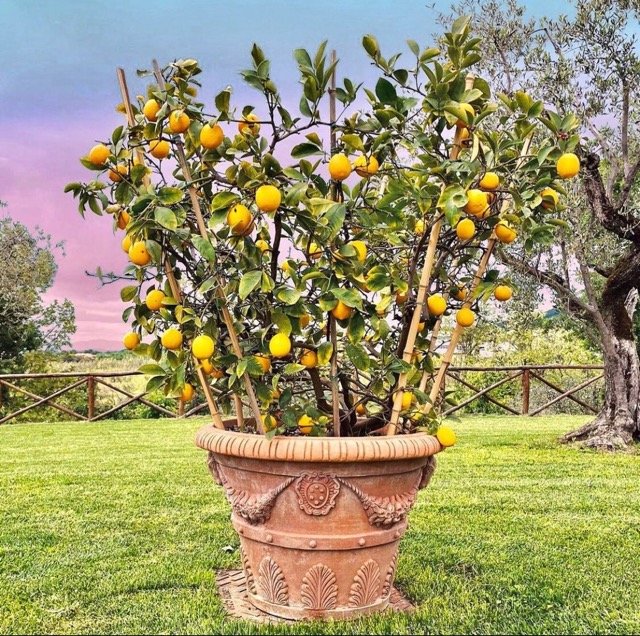
What to consider when growing a lemon tree in a pot
When choosing a planter for a citrus plant, it is important to keep in mind several key factors that affect its healthy growth:
- a breathable, durable material
- enough size for the plant to grow
- a tapered shape that is wider at the top
- the right position for the pot
If you follow these principles, you will give your lemon tree the conditions for healthy, steady growth.
Among the most classic planters for lemon trees is the Impruneta terracotta pot decorated with citrus fruits and leaves.
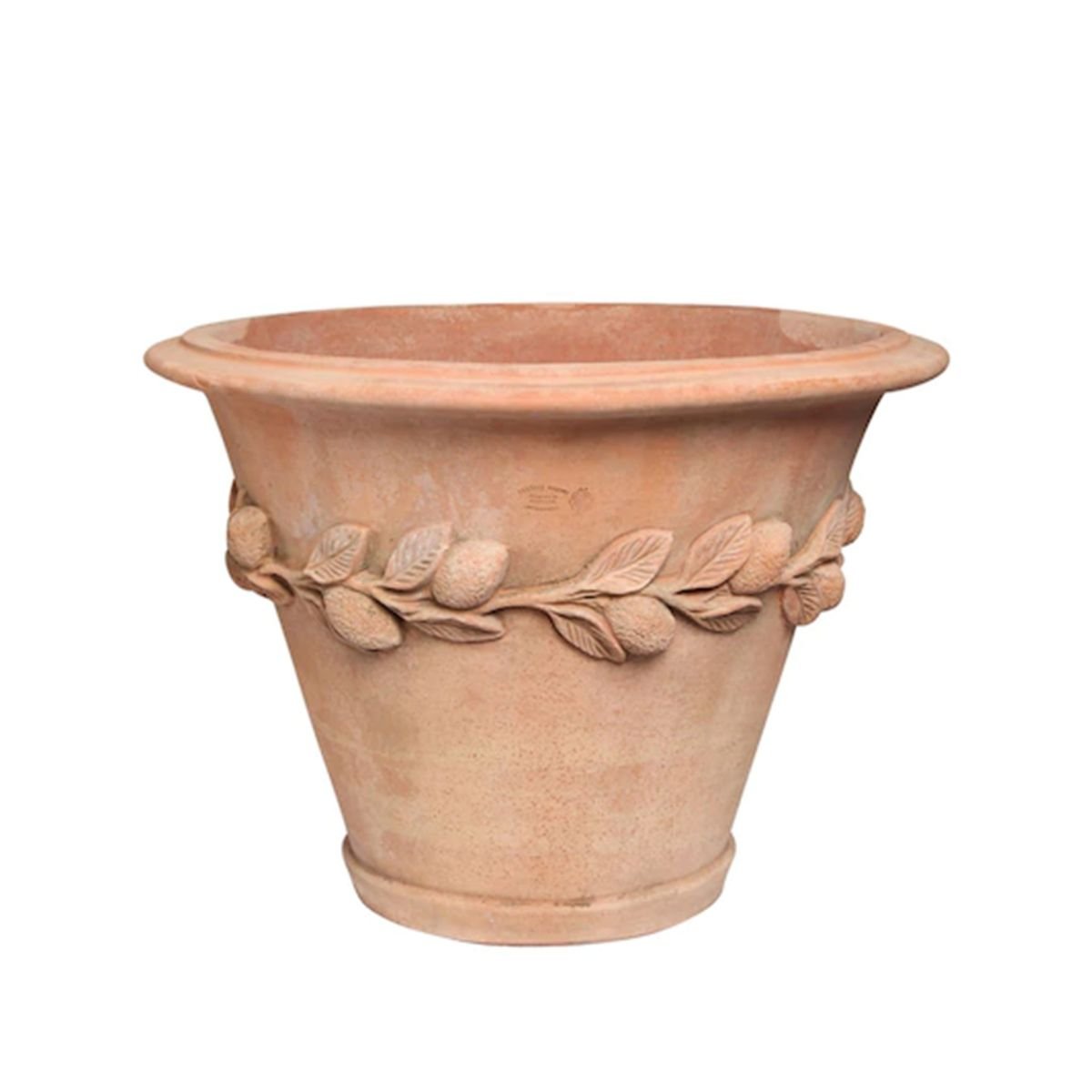
A breathable, durable material such as terracotta
Terracotta planters for lemon trees are ideal for planting and growing almost all kinds of citrus. The natural porosity of the clay allows constant air circulation and helps keep a balanced level of moisture around the roots.
Terracotta also helps excess water drain away naturally, reducing the risk of waterlogging and root rot. It keeps the temperature and moisture of the soil more stable too. In addition, the durability of the material protects the plant from bad weather and temperature swings.
It is precisely these properties that make Impruneta terracotta suitable for growing lemon trees in coastal areas too, where salty air can affect the soil. A quality planter made of this material can be used for many years without losing its function or looks.
Planter size for a citrus plant
One of the first criteria is the size of the planter relative to the size of the tree. A planter that is too large can hold too much water and damage the root system, while one that is too small restricts the plant’s growth.
It is best to choose a planter only slightly larger than the current root ball. This has several advantages:
- the roots have enough room to grow without being unnecessarily cramped
- a larger volume of soil provides more water and nutrients
- the plant gains better stability, especially when it is bearing fruit
- air circulation around the roots improves
Tapered planters are ideal for lemon trees
When choosing a planter, its shape matters too. Tapered models that are wider at the top than at the bottom are very well suited to growing lemon trees.
A tapered shape improves air flow around the roots and helps the plant breathe better. With a narrower base and wider top rim, moisture also concentrates better around the root system. This helps protect the roots from compacted soil and slows water from draining away too quickly.
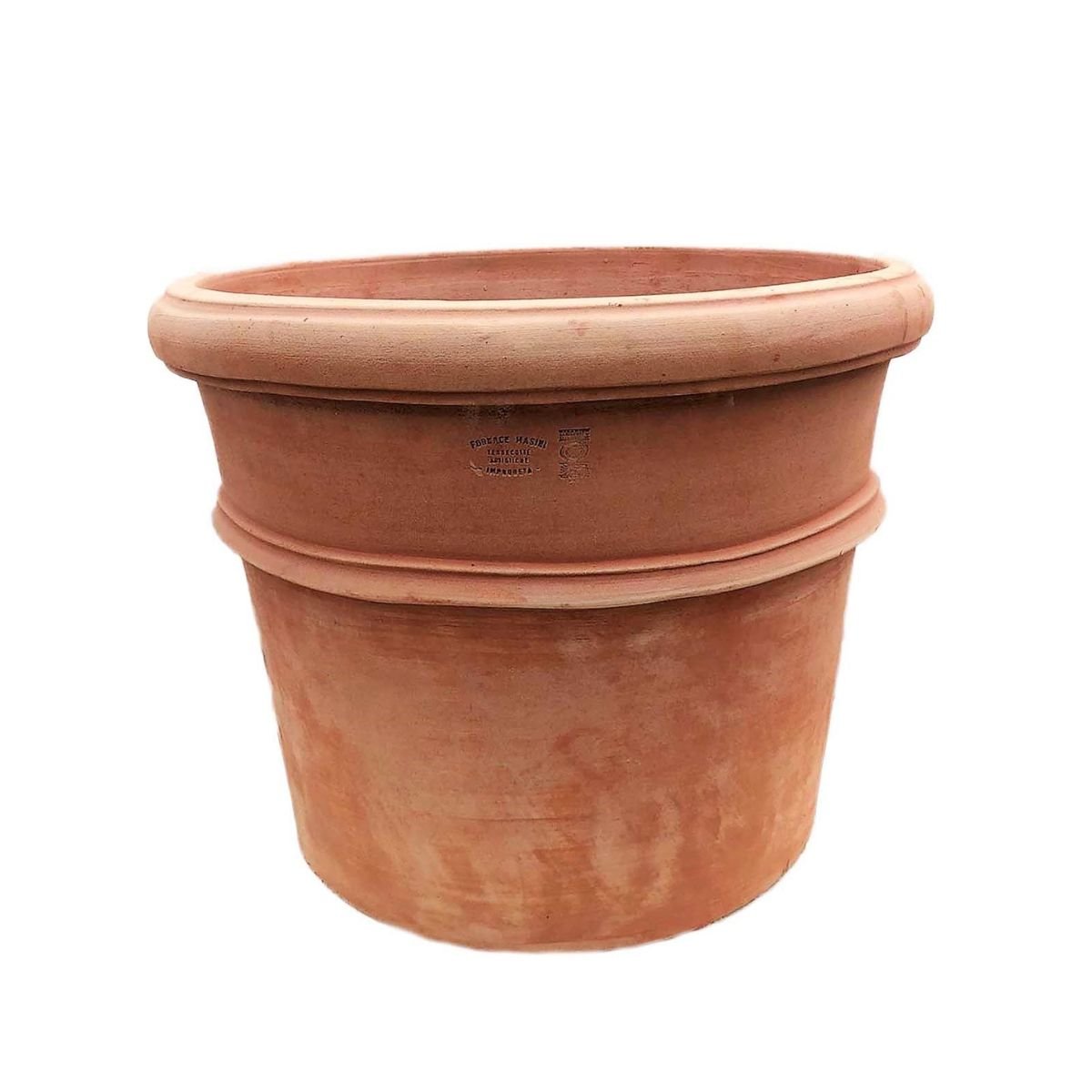
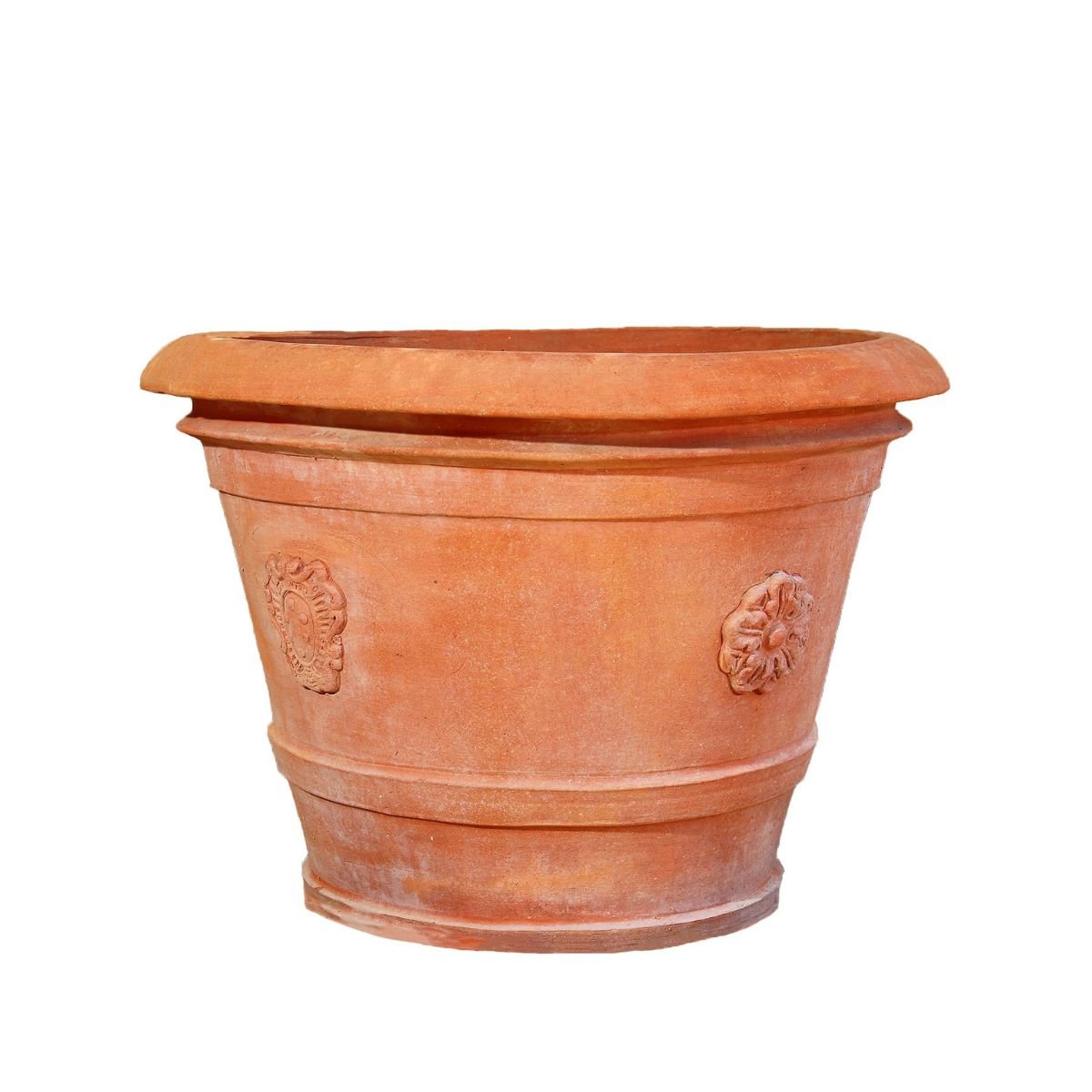
Greater stability with cylindrical planters
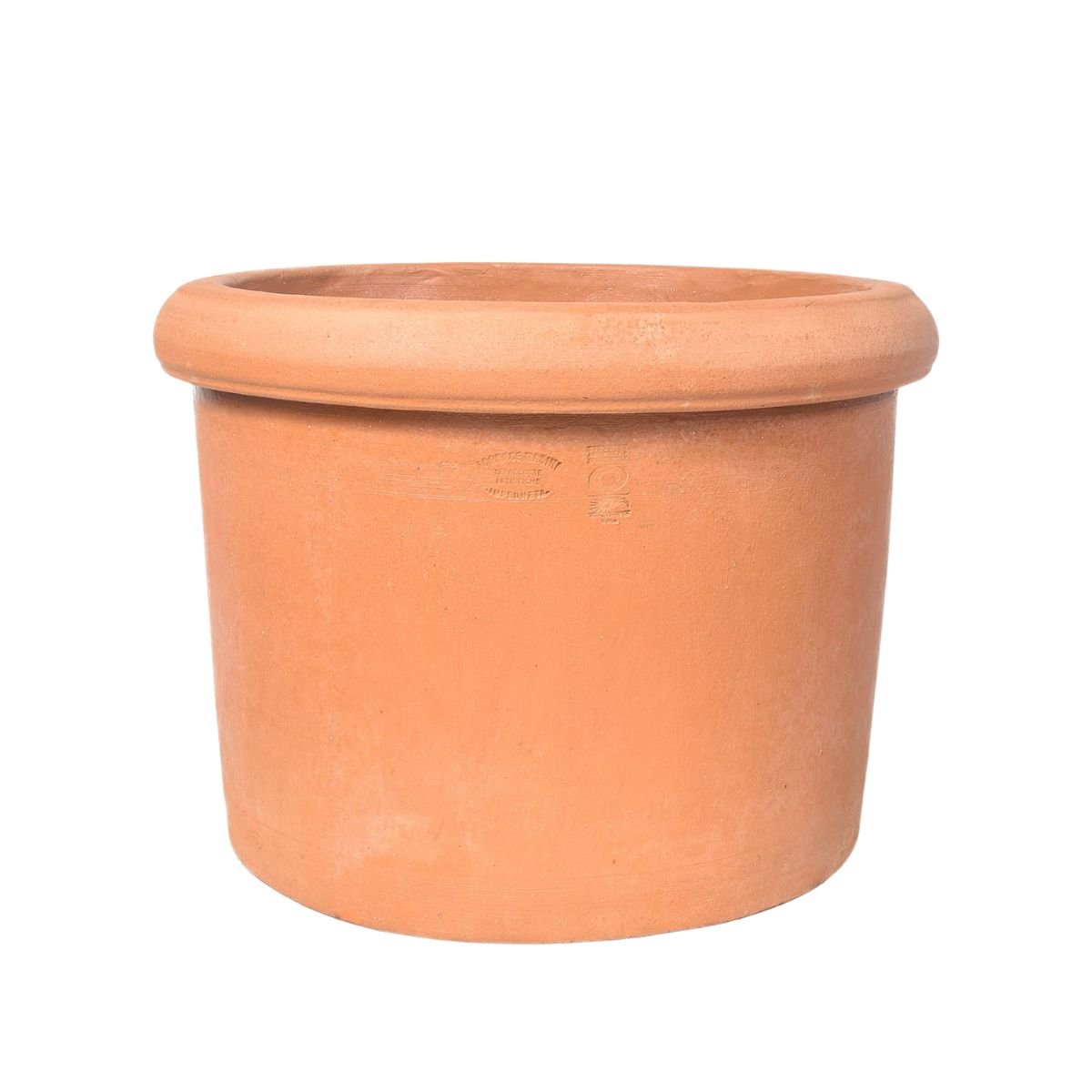
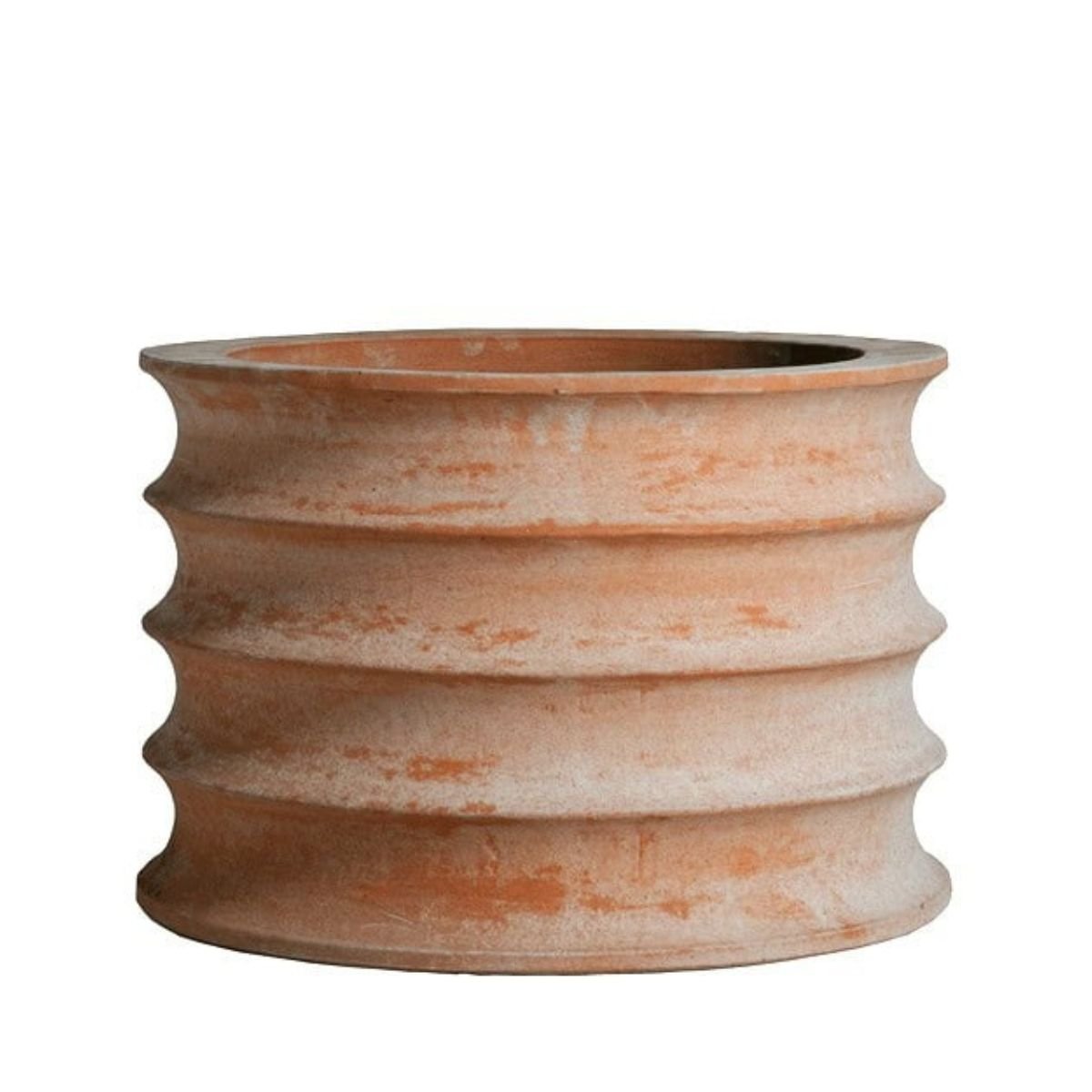
Cylindrical planters are another good option for lemon trees. This shape provides greater stability, making it an excellent choice especially for outdoor plants on a balcony or terrace, where they may be exposed to stronger gusts of wind.
Thanks to the wider base and evenly distributed footprint, the risk of the plant tipping over in changeable weather is reduced.
Here is a selection of cylindrical planters ideal for citrus plants:
How to protect a potted lemon tree in winter
The lemon tree is an evergreen plant that, with proper care, can flower up to twice a year. Winter, however, needs special attention. Here are a few basic tips on protecting a potted lemon tree:
- Move the pot indoors. If you live in an area with low temperatures, it is best to bring the plant inside so the roots do not freeze. A bright room that is not overheated, such as a conservatory or a spot by a window, is ideal. A suitable temperature for a lemon tree is roughly between 10 and 28 °C.
- Cover the plant. If you cannot move the lemon tree indoors, cover it with a protective frost fleece. Make sure the material does not touch the leaves, as it could trap moisture and encourage mould.
- Water sparingly. In winter a lemon tree needs less water than in the warm months. Water only when the soil feels dry to the touch.
- Fertilise with care. During the dormant period it is best to cut back on feeding considerably.
- Protect the plant from wind. Cold wind can dry out the leaves and weaken the whole tree, so it is better to place the pot in a more sheltered spot.
Now that you know how to choose the ideal planter for a lemon tree, you can give your plant an environment that supports its health, beauty and fruitfulness. Impruneta terracotta planters combine function, durability and timeless aesthetics that bring an authentic Mediterranean character to gardens, terraces and interiors.
Give your lemon tree the very best and turn growing citrus into a joyful ritual with a touch of Italian craftsmanship.
Frequently asked questions
What size planter does a lemon tree need?
A lemon tree needs a planter only slightly larger than its current root ball. One that is too small restricts root growth, while one that is too large can hold too much water and increase the risk of waterlogging.
Is terracotta or plastic better for a lemon tree?
Terracotta is usually the better choice for a lemon tree. It is breathable, helps regulate moisture better and creates a healthier environment for the roots. Plastic pots are lighter but usually retain more moisture.
Does a lemon tree planter need a drainage hole?
Yes, a drainage hole is very important. Lemon trees do not tolerate soil that stays waterlogged, and without proper drainage the roots can be damaged or rot.
How often should a potted lemon tree be repotted?
Younger lemon trees are usually repotted more often, typically every one to two years. For larger, older plants a longer interval is enough, depending on the state of the roots, the quality of the soil and the plant’s overall vitality.
Can a potted lemon tree stay outside in winter?
It depends on the outdoor temperatures and conditions. Lemon trees are sensitive to frost, so in the cold season it is usually safer to keep them in a bright, sheltered, frost-free place.
What planter shape is best for a lemon tree?
Tapered planters are a very good choice, as they support air flow and good moisture management. For outdoor spots, stable cylindrical models can also be an advantage, especially in windier locations.