
A terracotta composter is a natural way to turn organic household waste into quality compost for the garden, flower beds and container growing. Thanks to the naturally breathable properties of terracotta, organic matter breaks down in a more balanced way without excess moisture building up. That is why this type of composter is a popular choice for anyone looking for a functional, natural and attractive solution for composting at home.
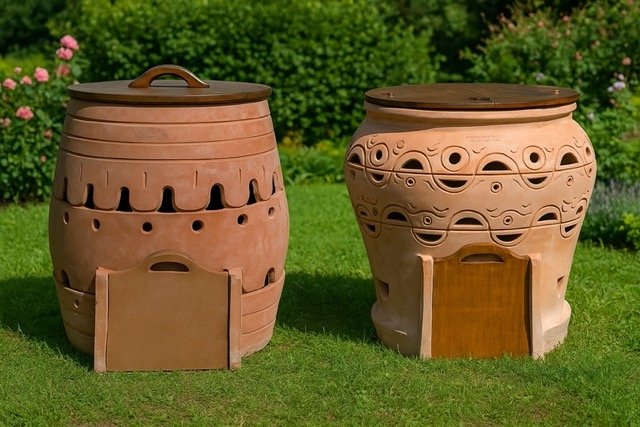
Why choose a terracotta composter
Terracotta is one of the traditional materials valued in garden design for its natural character, its ability to breathe and its long lifespan. In a composter these properties are not just about looks – they also matter in practice for the composting process itself.
A natural, breathable material
The porous structure of terracotta allows air to circulate naturally inside the composter. This limits excessive moisture build-up and reduces the risk of unpleasant odours, so the composting process can run more naturally and evenly.
Natural regulation of moisture and temperature
Compared with plastic, terracotta helps maintain a more stable environment inside the container. This supports the conditions needed for organic material to break down and reduces the risk of unwanted fermentation caused by excess moisture.
An eco-friendly, long-lasting solution
Terracotta is a natural material that looks authentic and blends naturally into a garden setting. With proper use and care it can last for many years, making it a long-term alternative to ordinary plastic composters.
How to start using a terracotta composter
Using a terracotta composter is simple. For good results, however, it is important to follow a few basic steps, from choosing the right spot to layering the material in a balanced way.
Choosing the right spot
It is best to place the composter in a shady, well-ventilated spot. Direct sun can make the contents dry out faster, especially in warmer months. If possible, choose a place where moisture can drain away naturally.
Preparing the bottom layer
Start with a layer of dry material at the bottom, such as leaves, small twigs or plain, uncoated cardboard. This layer helps air flow and keeps moisture balanced right from the start.
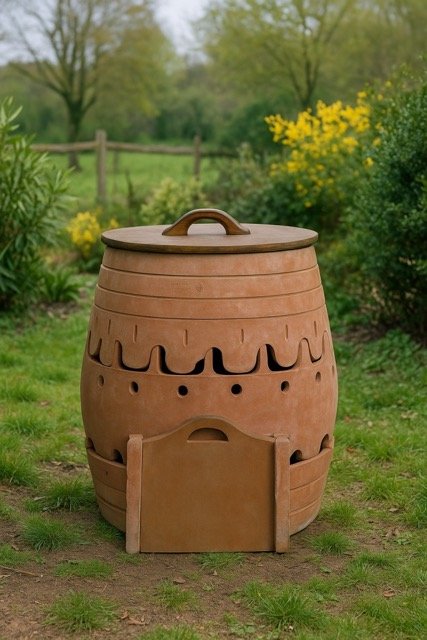
What goes into the composter
The basis of balanced compost is alternating nitrogen-rich “green” materials with carbon-rich “brown” materials. This balance keeps decomposition on track and helps prevent unpleasant odours.
Examples of green materials:
- fruit and vegetable scraps
- coffee grounds and tea bags
- crushed eggshells
- fresh plant trimmings
Examples of brown materials:
- dry leaves
- uncoated paper and cardboard
- untreated wood chips or sawdust
- small chopped twigs
What to keep out of the composter
For composting to work properly, some materials should not go into the composter. They can slow decomposition, cause odours or attract unwanted animals.
- meat, fish and bones
- dairy products
- oils, fats and heavily seasoned food
- cooked meals and similar kitchen leftovers
- animal droppings
- chemically treated materials, such as varnished wood or printed paper
- diseased or pest-infested plants
Looking after the composter
Turning the contents regularly
Even though terracotta is naturally breathable, mixing the contents roughly every 1–2 weeks improves aeration and can help it break down more evenly.
Checking the moisture
If the contents are too dry, add fresh material or a little water. If they are too wet, increase the share of dry ingredients such as leaves or cardboard. Well-made compost should be moist, not soggy.
How long compost takes to mature
Maturing time depends on the season and the amount of material you add. Compost can be ready in a few weeks or may take longer. Once it is dark and crumbly and smells like fresh soil, it is ready to use.
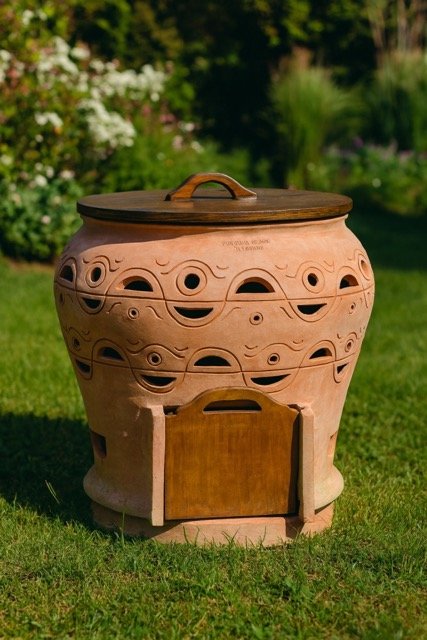
Terracotta or plastic
When choosing a home composter, terracotta and plastic are often compared. Both do the same basic job, but their properties differ.
Advantages of terracotta
Terracotta is breathable, natural and looks very refined. Thanks to its structure it supports more stable conditions inside the composter and helps limit moisture build-up and odours.
Limitations of plastic
Plastic tends to hold more moisture, which can increase the risk of condensation and unpleasant smells. For this reason it is not always the ideal choice, especially where not only practicality but also the quality of the setting and overall look matter.
The benefits of good compost
Mature compost improves soil structure, feeds plants naturally and reduces the need for commercial fertilisers. At the same time, it lets you make good use of organic household waste and turn it into valuable material for the garden.
Conclusion
A terracotta composter is a practical, natural and attractive solution for composting at home. Thanks to the breathability of terracotta, organic matter can break down in a more balanced way with less risk of unpleasant smells. For anyone looking for a functional yet natural-looking feature for the garden, a terracotta composter is a well-considered choice.
Frequently asked questions
Will the composter smell if it is close to the terrace?
Properly set up and maintained compost does not smell bad – it should have a natural scent like forest soil. Terracotta is also extremely breathable, giving much better air circulation than ordinary plastic bins. This greatly reduces rotting and the unpleasant smells that come with it.
Can a terracotta composter stay outside in winter?
Yes, handmade Impruneta terracotta is highly frost-resistant. Thanks to the special composition of the local clay and firing at extremely high temperatures, it easily withstands temperatures well below freezing. Composting naturally slows down in winter, but the container itself does not need to be put away.
How long does it take to make good compost?
Maturing time depends on the mix of materials, moisture and outdoor temperature. In a breathable terracotta composter the process usually takes 3 to 6 months. Regular aeration (mixing) and the right ratio of carbon-rich (dry) and nitrogen-rich (green) ingredients can speed up maturing considerably.
Can the terracotta crack if the compost inside is too wet?
Quality Italian terracotta is porous and regulates moisture naturally – it partly absorbs excess water and lets it evaporate through its walls. For proper composting, however, the contents should not stay soggy (muddy) for long. We recommend always placing a drainage layer at the bottom, for example of dry twigs.
What size composter do I need for an average household?
For an average household and ordinary kitchen waste (peelings, vegetable scraps, coffee grounds, tea bags), a medium-sized composter is usually enough. If you also plan to add larger amounts of garden waste such as grass clippings or leaves, it is better to choose a bigger model or get two containers.
What should I do if fruit flies appear in the composter?
Fruit flies and other small insects are attracted mainly by exposed fresh fruit waste. The simplest and most effective solution is always to cover freshly added organic waste with a light layer of dry material – such as dry leaves, torn cardboard or finished soil. This keeps insects out and gives the compost the carbon it needs.