
At first glance, the words Made in Impruneta may look like a guarantee of origin. On their own, however, they tell you nothing about where the clay came from, where the piece was actually made or whether it was produced in the traditional way. That is exactly why the C.A.T. – Ceramica Artistica e Tradizionale mark exists: it protects authentic artistic and traditional ceramics from Impruneta.
At TuscanyLux we do not choose terracotta on shape or colour alone. What matters just as much to us is the verifiable origin of the material, the place of manufacture and the craft process. C.A.T. certification lets you tell genuine Impruneta terracotta apart from products that merely borrow its name.
What does C.A.T. stand for?
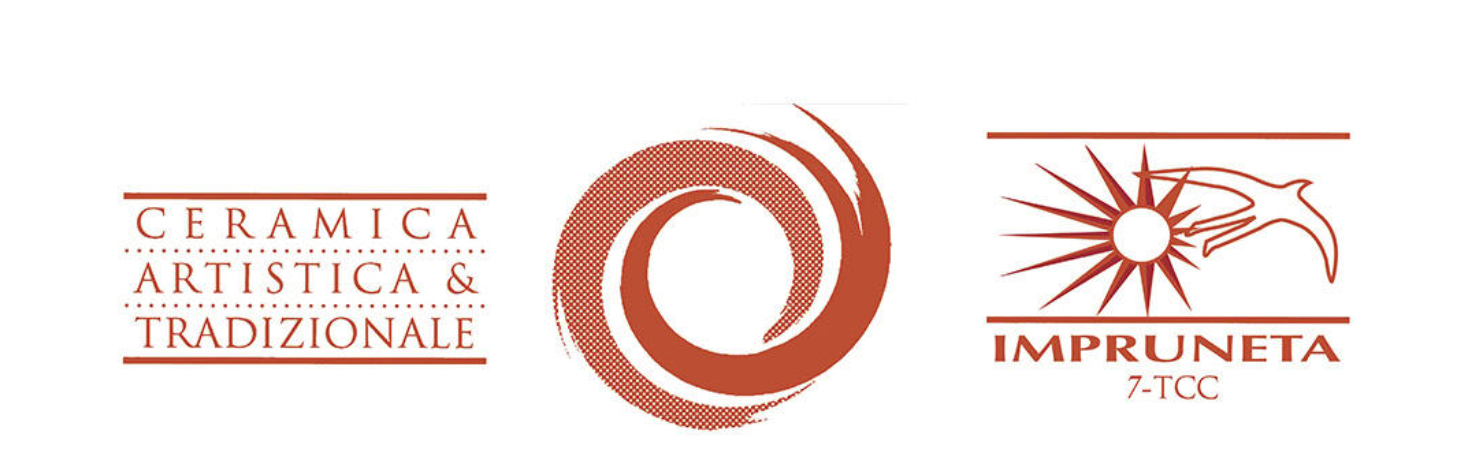
The abbreviation C.A.T. stands for the Italian term Ceramica Artistica e Tradizionale – artistic and traditional ceramics. It is an official guarantee mark based on Italian Law no. 188 of 9 July 1990, which protects artistic, traditional and high-quality ceramic production.
For Impruneta, a specific production code was then approved by ministerial decree on 21 March 2008 – the Disciplinare di produzione della ceramica artistica e tradizionale di Impruneta. Its purpose is to protect the designation of origin and to preserve the characteristic materials, production techniques and craft tradition of the area.
So it is neither a private award given by a single maker nor a marketing logo designed for advertising. C.A.T. is a mark defined by territory and production method, and its use depends on meeting set conditions.
Who is allowed to use the C.A.T. mark?
According to official information from the Municipality of Impruneta, only Impruneta makers listed in the relevant register of producers may use the C.A.T. mark. It may be applied only to pieces that are:
- made in kilns located within the municipality of Impruneta,
- produced in accordance with the official production code,
- traceable to their maker, place of origin and the type of material used.
The Municipality of Impruneta’s official list of mark holders includes, among others, Fornace F.lli Masini and Fornace Poggi Ugo – two historic workshops whose pieces we select for the TuscanyLux range.
Why is “Made in Impruneta” on its own not enough?
Impruneta’s historic workshops long had to contend with products labelled Made in Impruneta or Terra di Impruneta that were made neither from local clay nor by traditional craft methods. Fornace Masini states openly that protecting customers from this kind of confusion was one of the reasons the C.A.T. mark was put into practice.
The difference is not just the wording on the piece. C.A.T. links a specific maker, the origin of the material, the place of manufacture and a prescribed method of production.
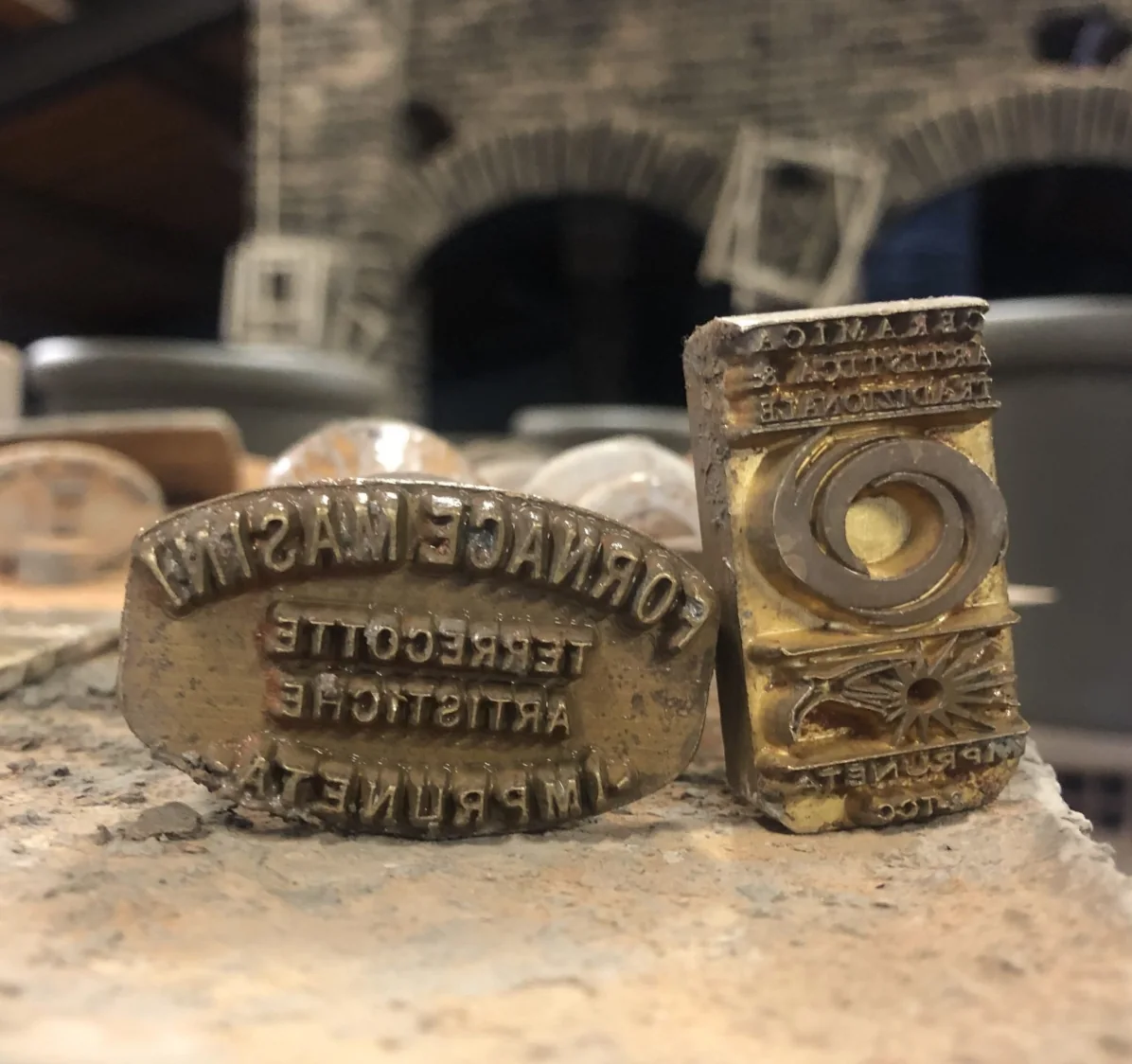
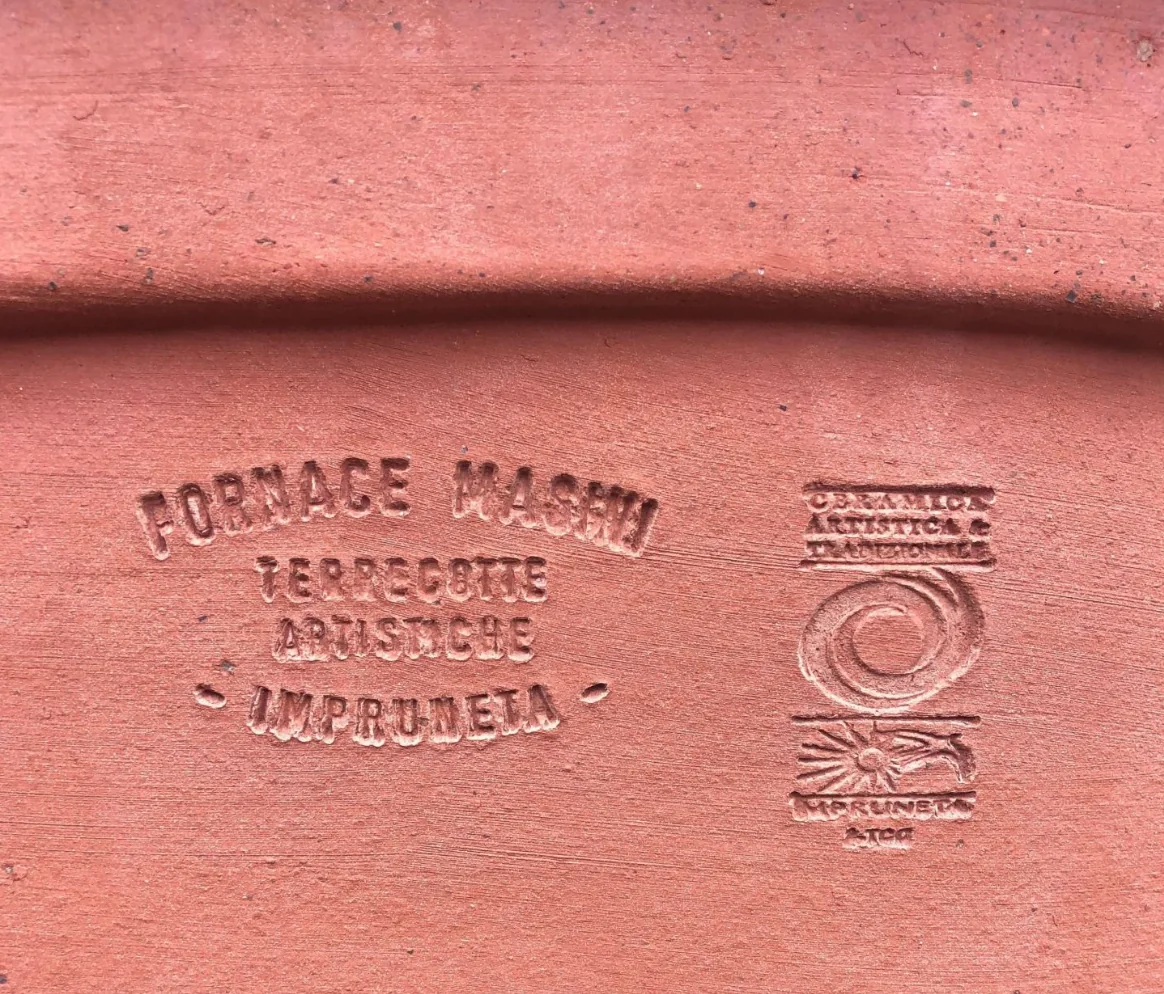
On Fornace Masini pieces, the mark is accompanied by the maker’s identification number 02-TCO, which appears next to the workshop’s own stamp. So you are not buying anonymous terracotta, but a piece with a traceable origin.
What does the C.A.T. mark actually confirm?
The C.A.T. mark helps verify several qualities that cannot be judged from appearance alone in ordinary garden pottery:
- Origin: the piece comes from a kiln within the municipality of Impruneta.
- Maker: the piece is linked to a specific registered workshop.
- Material: the material used meets the rules of the production code for Impruneta ceramics.
- Craftsmanship: production followed set traditional and craft methods.
- Traceability: the stamp or code makes it possible to link the piece to its maker.
That is the essential difference between a general claim of origin and a piece whose origin can be proven by a specific mark and the maker’s registration.
Impruneta clay and frost resistance
The authenticity of Impruneta terracotta does not lie in the place of manufacture alone. Its foundation is the local clay and the way it is worked and fired. Thanks to the resulting properties, genuine Impruneta terracotta is known for its long life and high resistance to the weather.
Individual workshops quote specific values for their products. Fornace Masini states resistance even at extreme temperatures of around −25 °C, while Poggi Ugo quotes frost resistance beyond −30 °C for its terracotta. These figures apply to each maker’s own products and assume correct use – above all, free drainage of water from the pots.
C.A.T. is not, in itself, a laboratory frost-resistance report for every single pot. It is, however, an important guarantee that the piece comes from the setting, material and production tradition with which the exceptional properties of Impruneta terracotta are associated. You can see these qualities in our collection of handmade terracotta planters from Impruneta.
Seven centuries of documented ceramic tradition
Terracotta making in Impruneta is not a recently invented sales story. Florence’s official tourism portal cites a notarial deed dated 23 March 1309 that documents the local terracotta makers’ craft as early as the beginning of the 14th century.
Over the centuries, Impruneta terracotta was also used on major Florentine buildings, among them Santa Maria del Fiore Cathedral, the Basilica of San Lorenzo, the Medici Chapels and the Biblioteca Medicea Laurenziana. The same continuity of craft is reflected in today’s terracotta sculptures from Impruneta. Today’s C.A.T. mark turns this tradition into something you can actually verify.
The diamond mark of Impruneta’s historic kilns
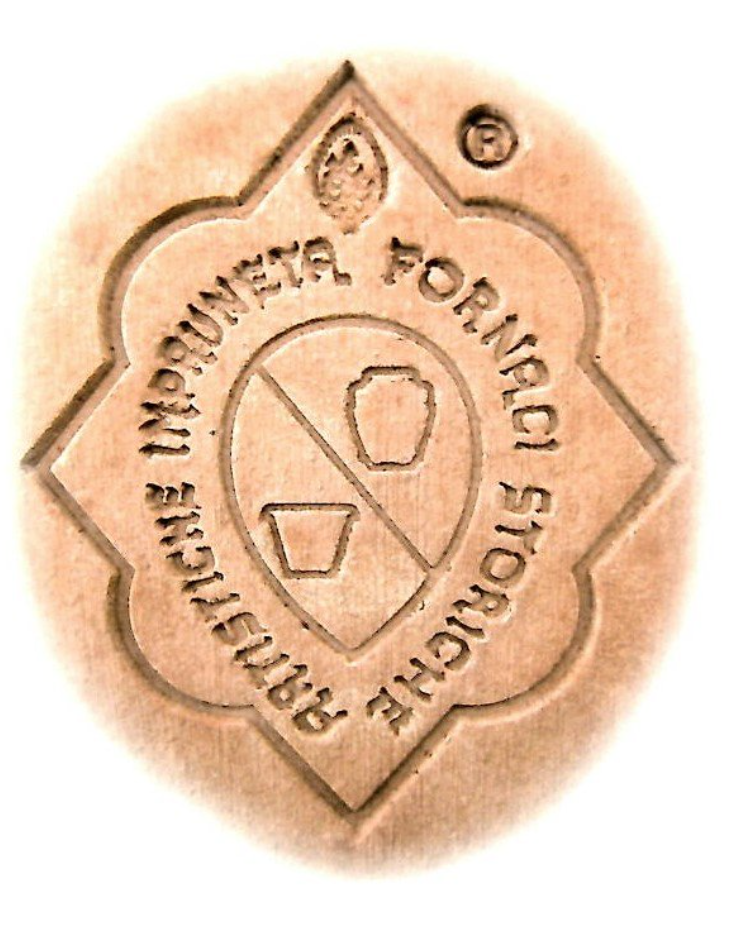
Alongside the C.A.T. mark, some pieces also carry the diamond-shaped mark of the Association of the Historic and Artistic Kilns of Impruneta. The association was founded by the historic workshops Fornace Masini, M.I.T.A.L. and Antica Fornace Poggi Ugo; the craftsman Massimo Carbone joined later.
According to Poggi Ugo, the members’ pieces are made by hand using traditional techniques and exclusively from original Impruneta clay with its characteristic grey-blue colour, whose origin is tied to the municipal territory. Every piece made by a member carries, besides the maker’s mark, the association’s characteristic diamond-shaped symbol.
How to recognise genuine Impruneta terracotta
When choosing, we recommend not relying only on colour, patina or a general claim of Italian origin. On an authentic piece, look above all for:
- the mark of a specific kiln or maker,
- the C.A.T. mark,
- the maker’s identification code, if the workshop uses one,
- for association members, the diamond mark of the historic kilns,
- clear information that the piece was made in Impruneta itself.
Depending on the type and size of the piece, the stamps may be on the base, on the back or in another discreet place. On handmade terracotta their appearance can vary slightly, because the impression is made during production.
What C.A.T. certification means for TuscanyLux customers
We choose pieces from Fornace Masini and Poggi Ugo because they stand for more than aesthetics: they have a specific, verifiable origin. So you are not just buying a planter, a vessel, a sculpture or a decoration. You are buying a piece made in a place where knowledge of working with terracotta has been handed down for centuries, by a maker you can trace through their mark.
The price of genuine Impruneta terracotta therefore reflects more than the amount of material. It covers the local raw material, handwork, a long production process, the craftsman’s experience and an origin that no printed label can imitate.
C.A.T. certification is not a decorative logo. It answers a simple question: who made the piece, where was it made and under which rules?
Browse the full collection of genuine Impruneta terracotta from the historic workshops of Fornace Masini and Poggi Ugo.